
Description
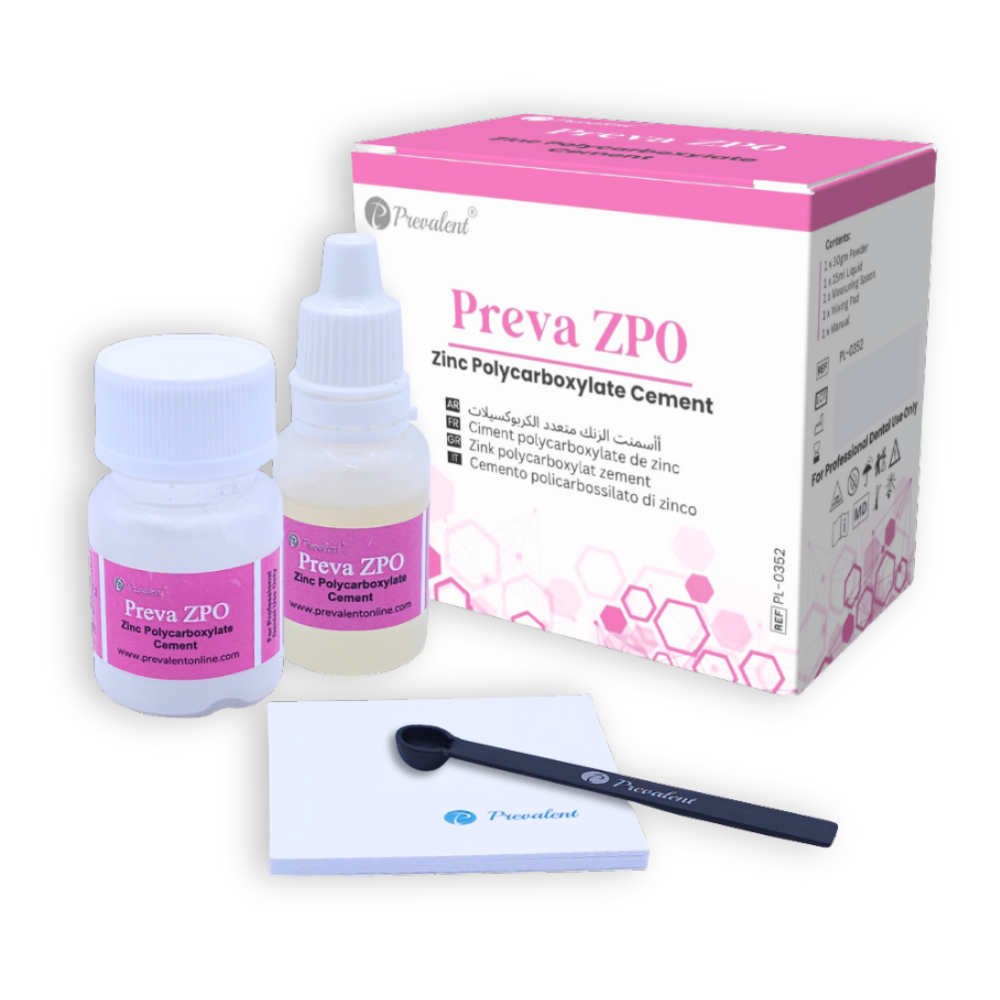
Preva ZPO – Zinc Polycarboxylate Cement
Experience gentle, biocompatible cementation with Preva ZPO, Prevalent’s professional zinc polycarboxylate cement. Known for its excellent biocompatibility and low irritation properties, it’s ideal for sensitive cases and situations requiring gentle handling.
Preva ZPO combines reliable retention with tissue-friendly chemistry. The polyacrylic acid liquid creates a chemical bond to tooth structure while maintaining lower acidity than traditional zinc phosphate cements, making it kinder to pulp tissues.
Clinical Applications
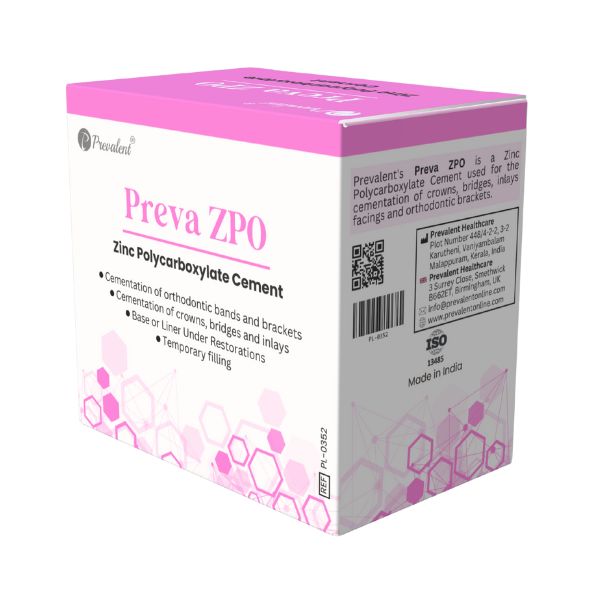
- Permanent Cementation- Crowns and bridges – especially when pulp sensitivity is a concern
- Inlays and Facings- Gentle cementation of indirect restorations
- Orthodontic Brackets- Biocompatible bonding of metal brackets and bands
- Cavity Liner- Protective base under all restorative materials
- Temporary Fillings- Short-term restorations when gentle chemistry is preferred
- Pediatric Dentistry- Fillings in deciduous teeth – gentle on young pulp tissue
Why Choose Preva ZPO?
- Gentler on Pulp Tissue
Unlike zinc phosphate, polycarboxylate cements have lower acidity during setting. This makes them significantly gentler on sensitive pulp tissue, reducing the risk of post-cementation sensitivity. - Chemical Bonding Advantage
Preva ZPO actually bonds chemically to tooth structure through chelation with calcium in enamel and dentin. This provides better retention than purely mechanical cements. - Ideal for Sensitive Cases
When you’re concerned about pulp health – deep preparations, vital young teeth, or patients with sensitivity history – Preva ZPO offers reliable retention with biocompatible chemistry. - Less Soluble in Oral Fluids
Polycarboxylate cements show better resistance to dissolution in oral fluids compared to some other traditional cements, contributing to long-term margin integrity. - Proven Clinical Success
Decades of successful use in general dentistry. Trusted biocompatibility. Predictable outcomes for routine cementation procedures. - Anticariogenic Benefit
Sodium fluoride content provides ongoing fluoride release, offering protection against recurrent decay at restoration margins. - Simple, Reliable Technique
No complex protocols needed. Straightforward mixing and application. Consistent results with proper technique.
Working & Setting Times
- Mixing Time: 45-60 seconds
Setting Time: Approximately 2:00-2:15 minutes
Working Time: Adequate for comfortable placement and seating
Note: Times may vary with ambient temperature and mixing conditions
Frequently Asked Questions
Q: What is zinc polycarboxylate cement?
A: It’s a dental cement that uses polyacrylic acid instead of phosphoric acid, providing biocompatible cementation with chemical bonding to tooth structure.
Q: How is it different from zinc phosphate cement?
A: Polycarboxylate cement is less acidic (gentler on pulp), bonds chemically to tooth structure, and shows better biocompatibility than zinc phosphate.
Q: Is it gentler on sensitive teeth?
A: Yes. The lower acidity makes it significantly gentler on pulp tissue, reducing post-cementation sensitivity risks.
Q: Does it bond to tooth structure?
A: Yes. It chemically bonds to calcium in enamel and dentin through chelation, providing better retention than mechanical cements alone.
Q: Can I use it for all-ceramic crowns?
A: It works best with metal and PFM restorations. For all-ceramic crowns requiring strong chemical bonding, resin cements are preferred.
Q: How do I mix it properly?
A: Dispense 2 level spoons powder and 3-4 drops liquid. Gradually incorporate powder into liquid, mixing for 45-60 seconds.
Q: How long should I maintain pressure?
A: Maintain firm, continuous pressure for approximately 2:00-2:15 minutes during the setting period.
Q: Can I use this for orthodontic brackets?
A: Yes. It’s excellent for cementation of metal orthodontic brackets and bands with biocompatible chemistry.
Q: Does it contain fluoride?
A: Yes. The powder contains sodium fluoride for anticariogenic benefit and protection against recurrent decay.
Q: Can I use it as a cavity liner?
A: Yes. It’s suitable as a protective cavity liner under all types of restorative materials.
Q: Is moisture a problem during mixing?
A: Yes. Moisture contamination during mixing adversely affects performance. Use clean, dry mixing instruments.
Q: Can I use this for pulp capping?
A: No. It’s contraindicated for both direct and indirect pulp capping despite being gentler than zinc phosphate.
Q: Why does the patient need to bite on cotton?
A: Firm, continuous pressure during setting ensures optimal adaptation and retention. Cotton roll provides comfortable pressure maintenance.
Presentation
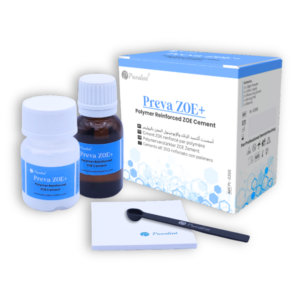
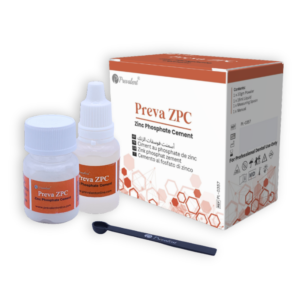
Ref.No.: PL-0352 -Preva ZPO- 30gm Powder Bottle,15ml Liquid Dripper Bottle, Measuring Spoon, Mixing Pad, Manual
Reviews
There are no reviews yet.