Prevalent Articulating Paper- Hydrophilic Articulating Paper
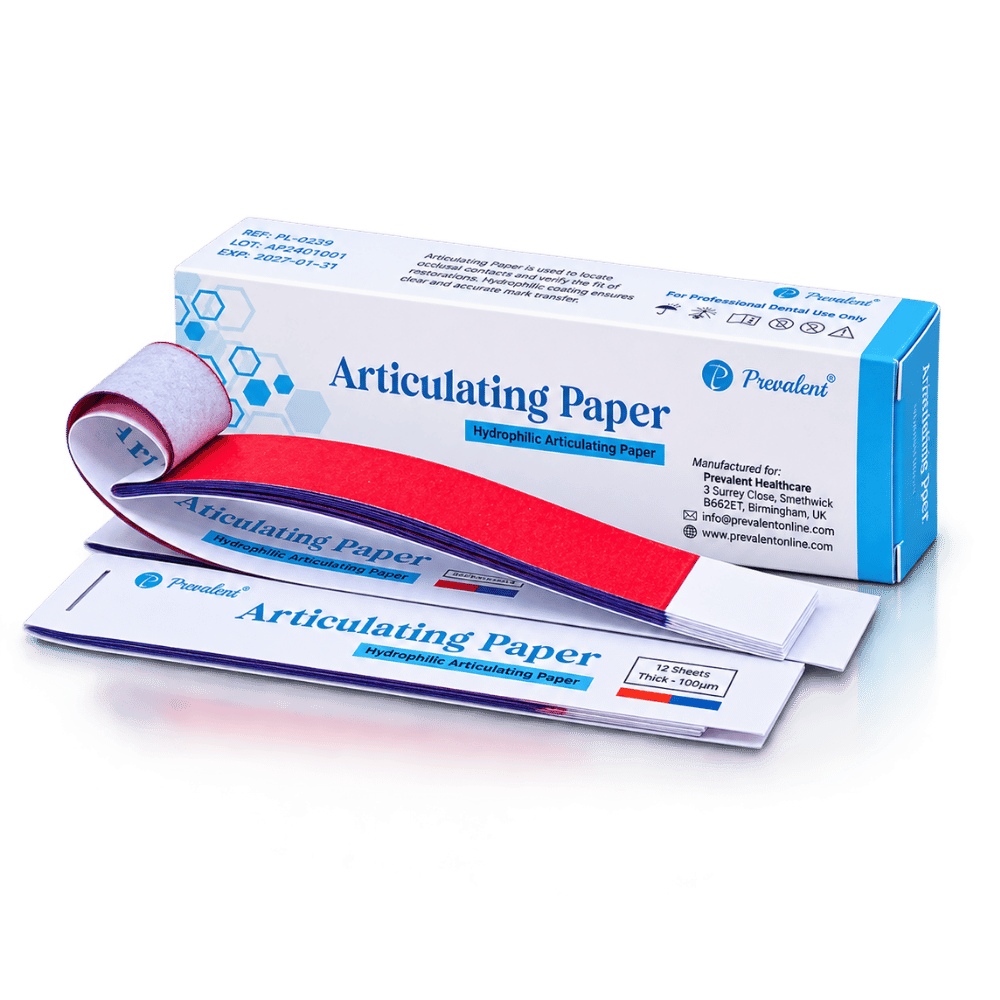
Prevalent Hydrophilic Articulating Paper helps dental professionals identify occlusal contacts, high spots and bite interferences with clarity and consistency. Its hydrophilic properties support reliable marking even when moisture is present on the tooth surface.
In addition, the flexible paper adapts easily to different tooth surfaces. It produces clear contact markings and helps dentists evaluate occlusion during restorative, prosthodontic and orthodontic procedures. Therefore, it provides a practical solution for routine occlusal assessment and adjustment.
Reliable Marking in Moist Conditions – Moisture can make conventional articulating papers difficult to use. However, the hydrophilic properties of Prevalent Articulating Paper support clear markings even when moisture is present.
Choice of Two Thicknesses– Dentists can choose between 50 μm thin paper and 100 μm thick paper. Therefore, they can select the appropriate option according to the clinical procedure and marking requirement.
Three Color Options– Prevalent offers Blue, Red and Red/Blue options. As a result, dentists can easily select a color that provides good visibility for a particular procedure.
Clear and Consistent Contact Points– The paper transfers color clearly onto contact areas. Consequently, dentists can identify high spots, occlusal contacts and interferences more easily.
Versatile Clinical Application– Dentists can use Prevalent Articulating Paper during restorative, prosthodontic and orthodontic procedures. In addition, it supports routine bite assessment and occlusal adjustment.