
Description
Porcelain Etch Gel – 9.6% Buffered Hydrofluoric Acid
Prevalent Porcelain Etch Gel contains 9.6% buffered Hydrofluoric Acid (HF) for etching compatible silica-based dental ceramics. Clinicians use it to condition the ceramic surface before suitable adhesive bonding and restorative procedures.
The gel reacts with the glass-containing phase of compatible ceramics. As a result, it creates a micro-retentive surface that supports subsequent adhesive procedures. Moreover, clinicians can combine the etching step with a compatible silane and bonding system according to the manufacturers’ instructions.
Clinical Applications
- Ceramic Surface Conditioning – Clinicians can etch compatible silica-based ceramic surfaces before adhesive procedures.
- Porcelain Restorations – In addition, the gel supports surface preparation of suitable porcelain restorations before bonding.
- Ceramic Veneers – Clinicians may use it to condition compatible ceramic veneers before adhesive cementation.
- Ceramic Inlays & Onlays – Moreover, the gel supports surface conditioning of suitable glass-containing ceramic inlays and onlays.
- Ceramic Repair Procedures – Clinicians may use it during indicated repair procedures involving compatible etchable ceramic surfaces.
Key Features
- 9.6% Buffered Hydrofluoric Acid – Provides HF-based etching for compatible silica-based dental ceramics.
- Gel Consistency – The gel form supports controlled placement on the intended ceramic surface.
- Micro-Retentive Surface Preparation – Moreover, etching modifies compatible ceramic surfaces to support subsequent adhesive procedures.
- Supports Adhesive Procedures – Clinicians can follow etching with a compatible silane and adhesive system according to the relevant instructions.
- Professional Ceramic Conditioning – The formulation supports indicated laboratory and clinical ceramic surface-conditioning procedures.
Why Choose Prevalent Porcelain Etch Gel?
9.6% Buffered HF Formulation
Prevalent Porcelain Etch Gel contains 9.6% buffered Hydrofluoric Acid. Therefore, it provides a dedicated etching material for compatible silica-based dental ceramics.
Controlled Gel Application
The gel consistency helps clinicians confine the material to the required ceramic surface. Moreover, controlled placement helps limit unnecessary spread during application.
Supports Ceramic Bonding Procedures
Etching creates a micro-retentive surface on compatible ceramics. As a result, the conditioned surface can proceed to the appropriate silanization and adhesive steps.
Suitable for Multiple Ceramic Restorations
Clinicians can use the gel with compatible porcelain and glass-containing ceramic restorations. For example, applications may include veneers, inlays, onlays, and other suitable ceramic restorations.
Frequently Asked Questions
1. What is Prevalent Porcelain Etch Gel?
Prevalent Porcelain Etch Gel is a 9.6% buffered Hydrofluoric Acid gel for professional conditioning of compatible silica-based dental ceramic surfaces.
2. What is Porcelain Etch Gel used for?
Clinicians use it to etch suitable ceramic surfaces before adhesive procedures. Therefore, it supports surface preparation before appropriate silanization and bonding.
3. What concentration of Hydrofluoric Acid does it contain?
Prevalent Porcelain Etch Gel contains 9.6% buffered Hydrofluoric Acid.
4. Can clinicians use Porcelain Etch Gel on ceramic veneers?
Yes, clinicians may use it on compatible HF-etchable ceramic veneers when the ceramic manufacturer’s instructions require hydrofluoric acid etching.
5. Can Porcelain Etch Gel be used on zirconia?
No. Hydrofluoric acid should not be used to etch zirconia. Clinicians should follow the zirconia manufacturer’s recommended surface-treatment protocol instead.
6. Is silane required after porcelain etching?
For ceramic bonding systems that require silanization, clinicians should apply a compatible silane coupling agent after completing the appropriate etching, rinsing, and drying procedure. Moreover, they should follow the instructions of the ceramic, silane, adhesive, and cement manufacturers.
7. Can Porcelain Etch Gel be used on natural tooth enamel or dentin?
No. This product is intended for compatible ceramic surfaces, not for routine etching of enamel or dentin. Clinicians should use an appropriate dental etchant for tooth structure.
8. Is Hydrofluoric Acid hazardous?
Yes. Hydrofluoric Acid can cause severe chemical injury and systemic toxicity following significant exposure. Therefore, clinicians must use appropriate PPE, isolation, careful application, and the emergency procedures specified in the product’s safety documentation.
Presentation
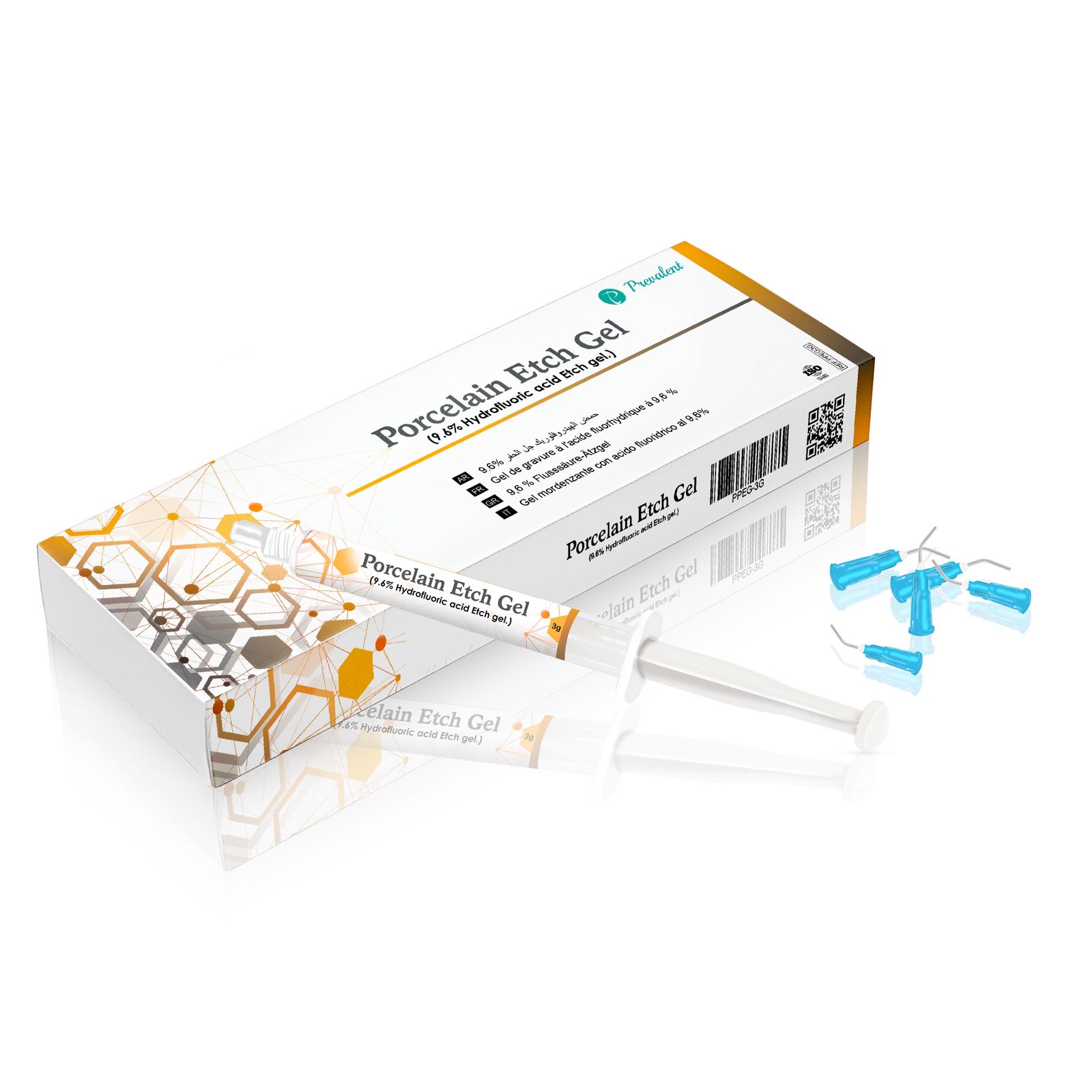
Ref.No: PPEG3G- Porcelain Etch Gel – 1x3gm Syringe, Applicator Tips, Manual
Reviews
There are no reviews yet.